01
Visible validity period
See whether the campaign has a clear start and end. A promotion without a defined window calls for more care, because time changes the value of the callout.

When a campaign grabs attention, the detail that matters is almost never in the visual highlight. The point is in the conditions, the deadline, and the type of action. Here you’ll find an editorial path to compare betamo promotions calmly, separate the callout from the rule, and understand what to look at before moving ahead.

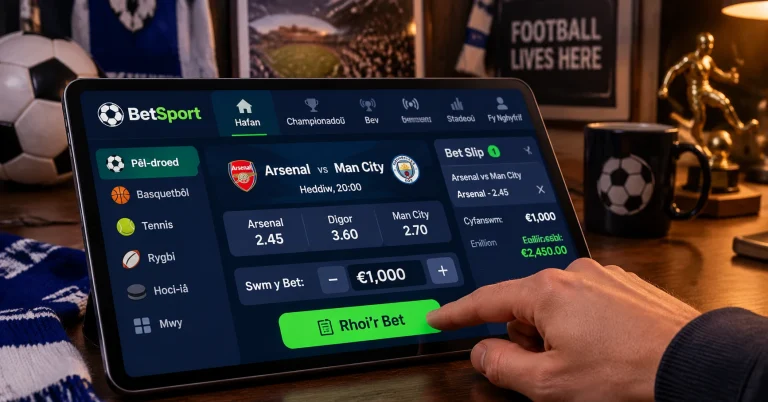
Promotional image. The reading needs to continue outside the image, with attention to the text and the destination conditions.
Betamo works as an informational starting point for adults in Brazil who want to understand promotions linked to electronic games without falling into rushed reading. The criteria below are practical, direct, and easy to apply to any ad.
See whether the campaign has a clear start and end. A promotion without a defined window calls for more care, because time changes the value of the callout.
Read what needs to happen for the offer to count. The name may be short; the rule is not. That is where the difference appears.
Not every promotion delivers the same thing. There may be a one-time advantage, temporary access, or a specific mechanic to participate.
The ad opens the door, but confirmation is on the destination page. Compare the entry text with the final text, without rushing.
After identifying the deadline, condition, type of action, and destination, it is worth observing the language used in the ad. Terms like “participate”, “activate”, “redeem”, or “check” usually indicate different steps, and each verb changes the reading of what was promised. When the text uses words that are too broad, the best move is to look for the sentence that explains what really needs to be done before considering the offer valid.
Another useful point is to separate what is visually highlighted from what is written as a rule. A banner may draw attention to a benefit, but the decisive information is usually in smaller lines, footnotes, or the next page. If the ad seems stronger than the supporting text, the reader should treat that as a sign to review it calmly, because appearance does not replace the condition.
It also helps to compare what is immediate with what depends on a later step. There are campaigns that present a general idea but only define the full experience after a click or internal navigation. In these cases, it is not enough to understand the main callout; you need to check whether the second reading confirms, restricts, or expands what was shown at first contact.
When in doubt, the most practical question is simple: does this describe a rule, an expectation, or just a call to attention? This separation keeps the reader from turning a suggestion into a commitment. In informational content, especially about promotions, the main care is not to assign the ad a meaning it has not yet explained objectively.
At betamo, this way of reading helps organize the analysis without rushing and without assuming conclusions too early. The goal is not to memorize terms, but to recognize structural signs in the text. That way, the reader can better distinguish what belongs to the campaign, what depends on a rule, and what is still only an expectation created by the initial communication.
A good promotional reading can be simple. The secret is to ask a few questions in the right order. This avoids interpreting the image as if it were already the whole rule.
Identify the central word of the campaign. It may be bonus, access, seasonal highlight, or another promotional action. The title calls; the body confirms.
A campaign with a defined deadline is usually easier to evaluate. If the time does not appear right away, look for the information before making any decision.
Some actions ask for registration, confirmation, or additional reading. Others are more direct. That difference changes the whole experience.
If the destination page softens, expands, or restricts what was said in the ad, the contrast already says a lot about the campaign.
A promotion that is good for one person may not be the best reading for another. The point is to understand the offer, not chase it on impulse.
In promotions, the visual is usually the first contact. Even so, the useful reading happens outside the initial shine. Betamo keeps this difference at the center of the editorial analysis.

The image works as an invitation. The real content appears when you read what comes with it, without relying only on the visual piece.
It usually summarizes the campaign’s intention. After that, look for the complement: deadline, condition, and destination.
The body of the text can change the meaning of the offer. Sometimes, the decisive information is in a discreet line.
If the promotion is for electronic games, the question stays the same: what actually changes for the adult reader who is evaluating the headline?
Some topics appear alongside promotions and deserve parallel attention. When the reading becomes broader, the comparison between pages also improves.
See how betamo handles campaigns and headlines related to bonuses in a separate and more specific reading.
Understand the editorial focus on limits, attention, and conscious use before moving on to any promotional page.
When the promotion talks to a specific type of game, it is worth cross-checking the reading with the corresponding category.
If the campaign touches on this topic, contextual reading helps avoid mixing different formats in the same ad.

The visual highlight can be useful, but it does not replace reading the terms. The comparison starts after the image.
The answers below are not trying to sell anything. They serve to guide the editorial evaluation of a betamo campaign with less noise and more context.
Not always. Promotion is a broader term. Bonus is only one of the possible forms of campaign. That is why it is worth reading the label carefully before assuming the format.
No. The banner draws attention, but it may omit the most important part for evaluation: deadline, usage rule, and any steps to participate.
Because the difference between the two usually shows whether the headline is just an entry point or whether the final content adds relevant limits and conditions.
Go back to the text calmly. If the information does not appear clearly, the reading should be more cautious. A promotion without a defined time deserves extra attention.
“In betamo promotions, the most useful part is rarely the most eye-catching. What guides the reading is the combination of deadline, condition, and context — and that only appears when attention moves away from the shine and into the text.”
Use this sequence as a simple guide. It works well when the ad has many visual layers and little direct explanation.
See whether the campaign has a clear validity period. Time changes the reading even before you get to the rest of the text.
Understand what needs to happen for the promotion to apply. This point is usually more important than the headline phrase.
Open the link and see whether the content confirms what was announced. The final reading needs to match the first impression.
If the offer makes sense for your moment, go ahead. If it does not, the best decision is also a valid decision.
These words help you navigate the topic without losing focus. They are useful for cross-checking pages and recognizing the type of campaign presented.

The visual piece comes in as support. The editorial reading remains the decisive part for understanding the campaign.

Last image preserved with the same external destination. The reading path continues between image, text, and context.
If you want to move on to related topics, also see bonus, responsible gaming and about.
Leituras complementares com contexto e critérios.